
With My Hero Academia: Vigilantes now streaming as an anime series and the main My Hero Academia story wrapping up its final arc, fans are asking one burning question: Is MHA Vigilantes canon?
The answer matters because it determines whether the spin-off's characters and events actually count in the larger hero universe. We've dug into the evidence to give you a definitive answer about the Vigilantes canon status.
Key Takeaways
- Yes, MHA Vigilantes is officially canon — creator Kohei Horikoshi supervises every chapter and the main manga directly references Vigilantes characters
- The Vigilantes protagonist Koichi appears in the main series finale as a licensed pro hero, confirming both stories exist in the same My Hero universe
- The Trigger drug, central to the Vigilantes story, appears throughout the main anime and manga, including the Shie Hassaikai arc
- Aizawa's complete backstory with Oboro Shirakumo is only told in Vigilantes, directly connecting to major reveals in the main plot
- Stain's origin as the vigilante "Stendhal" explains how he became the Hero Killer fans know from the original series
Shop Our My Hero Academia Collection Now
5 Reasons Why MHA Vigilantes Is Canon

1. Kohei Horikoshi Directly Supervises Every Chapter
The strongest proof that Vigilantes is canon comes from behind the scenes. While Horikoshi didn't write the manga himself, he actively supervises every single chapter of My Hero Academia: Vigilantes. According to official production documentation and interviews with the creative team, Horikoshi reviews all storyboards, suggests additions, and tells the creators what to remove. This isn't passive approval — it's active, creative control ensuring the spin-off stays true to the hero universe he created.
The production process works like this: Furuhashi writes the script and sketches storyboards, editor Tetsuya Sato reviews and approves them, then everything goes to Horikoshi for final sign-off. No chapter reaches fans without Horikoshi's direct involvement. This level of oversight means Vigilantes maintains perfect consistency with the main story, characters, and world-building.
2. Koichi Appears in the Main Series Finale
Perhaps the most undeniable canon confirmation came in Chapter 424 of the main My Hero Academia manga. During the post-war recovery arc, Koichi Haimawari — the protagonist of Vigilantes — appears as a licensed hero helping rebuild Japan. He's shown in his "Skycrawler" costume, confirming that his entire journey from unlicensed vigilante to pro hero actually happened within the same universe as Deku's story.
For fans who see the parallels between Koichi's underdog journey and Izuku Midoriya's rise, collectibles like the Izuku Midoriya SDCC 2019 Exclusive Enamel Pin celebrate that same heroic spirit.
This wasn't a subtle Easter egg. The anime adaptation in the Final Season episode 9 also includes Koichi's cameo, with Studio Bones deliberately showing him among the international heroes aiding Japan's recovery. When both the manga and anime include the same character reference, there's no question about the canon status.
3. The Trigger Drug Connects Both Series
The Trigger drug serves as a narrative thread directly linking Vigilantes to the main series. Trigger — a substance that enhances Quirks while impairing judgment — first appeared in My Hero Academia: Vigilantes Chapter 1 when it debuted in August 2016. The entire Vigilantes plot revolves around stopping its distribution in Naruhata.
That same drug later appears in the main My Hero Academia anime and manga during the Shie Hassaikai arc, where Overhaul's yakuza organization traffics it to fund their Quirk-Destroying Bullet experiments. The World Heroes' Mission movie also prominently features Trigger, with the villainous Humarise cult weaponizing the substance in "Trigger Bombs" designed to make Quirk users lose control. This continuity across manga, anime, and movies proves that both series share the same world and timeline.
4. Aizawa's Backstory Is Fully Explored
For fans who love Eraserhead, Vigilantes is essential viewing. The spin-off dedicates an entire arc (Chapters 59-65) to Shota Aizawa's time as a U.A. student, revealing his friendship with Hizashi Yamada (Present Mic) and Oboro Shirakumo. This backstory directly connects to one of the main series' biggest reveals: Kurogiri's true identity.
In the main manga and anime, we learn that the villain Kurogiri was created using Shirakumo's corpse after All For One recovered his body. Without Vigilantes, fans only get fragments of this story. With Vigilantes, you understand exactly who Shirakumo was, why his death devastated Aizawa, and why the Kurogiri revelation hits so hard emotionally. The main plot assumes this context exists, even if it doesn't require you to have read it.
5. Stain's Origin Story Is Revealed
The Hero Killer Stain is one of My Hero Academia's most compelling villains, but the original series never fully explains how he became the murderous ideologue fans meet in the Hero Killer arc. Vigilantes fills this gap completely.
In the spin-off, we meet Chizome Akaguro operating as "Stendhal," a masked vigilante who kills criminals he deems lacking conviction. His encounter with Knuckleduster — who calls out his hypocrisy and breaks his nose — triggers his transformation. Stendhal removes his mask, cuts off his damaged nose, and becomes Stain, redirecting his murderous philosophy toward "fake heroes" instead of villains. This origin story enriches the characters we already know while staying perfectly consistent with established events.
What Is My Hero Academia: Vigilantes?
My Hero Academia: Vigilantes is a prequel manga and anime series set in the same hero society as Boku No Hero Academia, taking place approximately five to six years before Izuku Midoriya enters U.A. High School. The story explores what happens when ordinary people with Quirks operate outside the law to help others — becoming vigilantes rather than licensed heroes.
Fans get to see All Might during his prime crime-fighting years, making this era a must-watch for anyone who loves the Symbol of Peace — and a great excuse to add an All Might SDCC 2019 Exclusive Enamel Pin or All Might Funko POP Pin to your collection.
The manga ran from August 20, 2016 to May 28, 2022, spanning 126 chapters collected in 15 volumes. The anime adaptation premiered on April 7, 2025, produced by Bones Film (a subsidiary of Studio Bones, which produces the main My Hero Academia anime). Season 2 premiered in January 2026.
Unlike the main series, which focuses on hero academia students training to become pros, Vigilantes examines the gray areas of heroism. It asks uncomfortable questions about hero society: Should people with helpful Quirks stand by during emergencies just because they lack a license? What happens to those who fall through the cracks of the professional hero system?
Shop Our My Hero Academia Collection Now
Who Are the Main Characters of MHA Vigilantes?
The Vigilantes cast introduces new protagonists while featuring familiar faces from the original series in supporting roles.
Koichi Haimawari (The Crawler) — The main protagonist, a 19-year-old college student who failed to become a licensed hero but uses his "Slide and Glide" Quirk to help people in his neighborhood. He starts as "Nice Guy," doing small favors, before becoming the vigilante Crawler under Knuckleduster's mentorship. His character arc mirrors Deku's in some ways, showing another path someone with a seemingly weak Quirk might take.
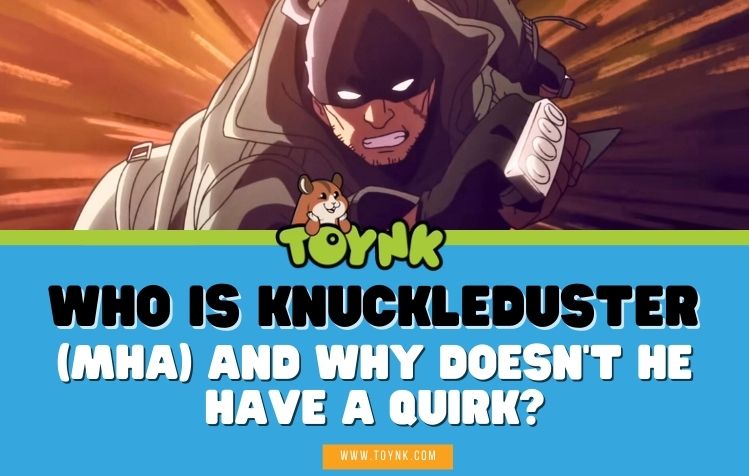
Knuckleduster (Iwao Oguro) — A brutal, Quirkless vigilante who serves as Koichi's mentor. His fighting style resembles Batman more than typical anime heroes — all combat skill, no powers. His backstory involves a stolen Quirk and a personal vendetta that connects to All For One's operations.
Pop☆Step (Kazuho Haneyama) — A street performer and part-time vigilante who fights alongside Koichi. Her "Leap" Quirk allows her to jump great distances. Her relationship with Koichi develops throughout the manga.
Familiar Faces — The series features younger versions of many pro heroes and villains from the main story, including All Might, Eraserhead, Midnight, Ingenium (Tensei Iida), Fat Gum, and even the future Hero Killer Stain operating as Stendhal. Seeing these beloved characters in their younger years adds new dimensions to the heroes fans already love — whether that's the Symbol of Peace in his prime or the underground hero who would become U.A.'s strictest teacher.
For fans building collections around their favorite characters, themed LookSee Mystery Boxes featuring All Might, Bakugo, Shoto Todoroki, and Eijiro Kirishima offer officially licensed collectibles celebrating these Class 1-A favorites.
How MHA Vigilantes Connects to the Main Series

Beyond the five major canon confirmations above, Vigilantes weaves numerous connections throughout its story that enrich the main My Hero Academia narrative.
Hero Society Critique — The main series eventually builds toward examining flaws in hero society, particularly during the Paranormal Liberation War and final arc. Vigilantes lays groundwork for these themes years earlier, showing how the licensing system fails ordinary people and creates the conditions for vigilantism and villainy alike.
Character Appearances — Multiple characters appear in both series with consistent characterization. Detective Naomasa Tsukauchi plays a significant role in Vigilantes, as does Captain Celebrity (an American hero who later influences Koichi's career path). These crossovers aren't cameos for fan service — they're integrated naturally into the narrative.
Timeline Events — Vigilantes depicts events referenced but not shown in the main manga, including All Might's early crime-fighting career in Japan, the development of the Villain Factory operation, and the evolution of underground hero work that shaped characters like Aizawa into the teachers we meet at U.A.
What Are the Differences Between Vigilantes and the Main Series?
While both stories share the same universe, Vigilantes has a distinctly different tone and focus that some fans prefer.
Darker Themes — Vigilantes deals more directly with crime, drugs, and moral ambiguity. The Trigger storyline involves addiction, manipulation of vulnerable people, and villains who operate in genuine gray areas. The violence is also more grounded and brutal, particularly in Knuckleduster's fight scenes.
Adult Protagonists — Unlike the high school setting of the main anime, Vigilantes follows college-age and adult characters navigating the real world. This allows for different storytelling that doesn't rely on school arcs or coming-of-age structures.
Street-Level Scale — The main series escalates to world-ending threats and massive battles. Vigilantes stays focused on neighborhood-level heroism, small-time villains, and the day-to-day reality of life in a Quirk-filled society. Some fans find this more relatable than the increasing power scaling of the original series.
Standalone Story — While connected to the main plot, Vigilantes tells a complete narrative with its own beginning, middle, and end. You can read or watch it independently without losing the thread.
How to Determine the Canon Status and Connection of Vigilantes to MHA
For fans trying to evaluate whether any spin-off or side story is canon to a franchise, here's the framework that applies to My Hero Academia: Vigilantes:
Creator Involvement — Does the original creator supervise or approve the content? Horikoshi's active oversight of every Vigilantes chapter establishes clear canonical authority.
Direct References — Does the main series reference events or characters from the spin-off? Koichi's appearance in Chapter 424 and the Trigger drug's presence throughout the main story confirm bidirectional references.
Consistency — Do the timeline, characters, and world-building align without contradictions? Vigilantes maintains perfect consistency with established My Hero Academia lore.
Official Positioning — How do the publishers and studios treat the material? Both Shueisha (manga publisher) and Studio Bones (anime producer) treat Vigilantes as an official prequel, not an alternate universe or non-canon side story.
By every standard metric, Vigilantes qualifies as fully canon to My Hero Academia.
What Are the Implications of MHA Vigilantes for the Main Story?
Understanding Vigilantes enhances your appreciation of the main series in several ways.
Emotional Weight — Scenes involving Aizawa, Present Mic, and Kurogiri hit differently when you know Shirakumo's full story. The Final Season's emotional beats land harder with Vigilantes context.
Character Motivation — Aizawa's harsh teaching style, his reluctance to expel students despite threatening to, and his underground hero philosophy all make more sense after seeing his trauma and growth in Vigilantes.
World-Building Depth — The main series often mentions events in passing that Vigilantes depicts fully. Understanding how Trigger emerged, how vigilantism operates, and how Hero Society developed gives you a richer picture of the world Deku inhabits.
Thematic Resonance — The main series' final arc questions whether the hero system serves everyone equally. Vigilantes spent 126 chapters exploring exactly that question through characters who fell outside the system.
For fans who want the complete My Hero Academia experience, Vigilantes isn't optional — it's the missing piece that makes the whole picture clearer. Whether you're diving into the anime for the first time or revisiting the manga with fresh eyes, the connections between both series reward close attention.
And for collectors looking to celebrate the full franchise, a My Hero Academia Collectibles Surprise LookSee Box makes a great way to discover new favorites from across the hero universe.
Frequently Asked Questions
Do I need to watch Vigilantes to understand My Hero Academia?
No, you can fully enjoy and understand the main My Hero Academia anime and manga without watching Vigilantes. The original series tells a complete story on its own. However, certain moments — particularly involving Aizawa, Kurogiri, and the hero society critique in the final arc — carry more emotional weight if you know the Vigilantes backstory. Think of it as enriching rather than required. If you love the characters and world, Vigilantes rewards your investment with deeper context.
When does Vigilantes take place in the MHA timeline?
My Hero Academia: Vigilantes takes place approximately five to six years before Izuku Midoriya enrolls at U.A. High School. This puts it roughly a decade before the events of the Final Season. The story begins when All Might is still actively fighting crime as the Symbol of Peace, Aizawa is a young pro hero (not yet a teacher), and Ingenium (Tensei Iida) is an active hero before his encounter with Stain. By the end of Vigilantes, we're still a few years away from Deku's story beginning.
To Summarize
Is MHA Vigilantes canon? Absolutely. The evidence is overwhelming: Horikoshi directly supervises every chapter, characters appear across both series, plot elements like the Trigger drug bridge both narratives, and major backstories like Aizawa's and Stain's exist only in Vigilantes while being referenced in the main story.
Whether you're a longtime fan of My Hero Academia or just discovering the franchise through the Vigilantes anime, understanding this connection enriches your experience of the entire hero universe. The spin-off isn't a side story you can ignore — it's a vital part of the world Horikoshi created.
Ready to explore more? Browse our complete My Hero Academia collection for officially licensed merchandise, and for fans who've discovered a new appreciation for Eraserhead through his Vigilantes backstory, our Shota Aizawa LookSee Mystery Box celebrates this fan-favorite character.
Shop Our My Hero Academia Collection Now
References:
- https://myheroacademia.fandom.com/wiki/My_Hero_Academia:_Vigilantes
- https://screenrant.com/my-hero-academia-aizawa-backstory-oboro-shirakumo-mha/
- https://screenrant.com/mha-vigilantes-anime-stain-backstory-dark-explainer/