
Magic: The Gathering can look intimidating from the outside — all those cards, colors, and rules. But it clicks faster than you think. We will show you how to play Magic: The Gathering, one simple step at a time, so you can sit down for your first game and actually enjoy it.
Key Takeaways
- The goal is simple: reduce your opponent's life total to zero using creatures, spells, and land cards.
- A turn has five parts, and most of your plays happen in the two main phases.
- Commander is the most popular format and the friendliest place to start when you play Magic: The Gathering.
- You do not need rare cards to have fun — most singles are worth under a couple of dollars, and a ready-to-play deck works right out of the box.
- Start small: learn the game's rules for free online first, then buy one product before spending big.
Shop The Magic the Gathering Collection Here
How to Play Magic: The Gathering: A Step-by-Step Flow

In Magic: The Gathering, two or more players take turns using cards from their own decks to defeat their opponents. Players typically start with 20 life and seven cards in hand, and the winner is the last player remaining. Commander games start players at 40 life instead.
Here is the short version of how the game plays:
- The player shuffles the deck and draws 7 cards.
- Decide who goes first. The first player skips their first draw.
- Play one land each turn to produce mana.
- Spend that mana to cast spells like creatures.
- Attack with creatures to lower your opponent's life total.
- Win when your opponent reaches zero life.
That is the whole card game in a nutshell. Everything else is just detail that makes Magic fun to play.
How Does a Turn Work in Magic: The Gathering?
A single turn in Magic always follows the same order every time. Knowing that order helps you plan your own game plan and avoid simple mistakes. There are five parts to work through in a typical game.
Beginning Phase
This phase opens with a draw step and a couple of quick actions. You untap your tapped cards, handle any upkeep effects, and then draw one card. Remember, the player who goes first skips the draw step on turn one.
Pre-Combat Main Phase
This is your first main phase, and a lot happens here. You can play one land, cast creatures, and play other spells here. Many players use this phase to build their board before attacking.
Combat Phase
The combat phase is where creatures attack. You choose which creatures attack, the defending player picks a blocking creature or two, and then combat works out the damage. Any unblocked creature deals its damage straight to your opponent's life total, so an attacking creature with no blocker always gets through.
Post-Combat Main Phase
After the combat phase ends, you get a second main phase. It works just like the first one. This is a smart time to play creatures you held back, so the defending player could not block them early.
End Step
The turn winds down here. End-of-turn effects happen, and if you hold more than 7 cards, you discard down to 7 into your discard pile. Then the game passes to the next player.
What Are the Different Card Types?

There are seven card types. Five of them — creatures, sorceries, instants, enchantments, and artifacts — make up the core spells you cast, while land cards and planeswalkers play their own special roles.
Lands
Land cards produce mana, the resource you spend to cast spells. You can play one land per turn for free. The five basic lands are Plains, Island, Swamp, Mountain, and Forest.
Creatures
Creatures are your attackers and blockers. A creature's power is the damage it deals, and its toughness is the damage it can take. A creature usually cannot attack or activate tap abilities the same turn it enters, a rule called summoning sickness.
Instants
Instants are fast spells you can cast at any time, even during your opponent's turn. They are great for surprises, like saving a creature or stopping a spell before it lands.
Sorceries
Sorceries are like instants but slower. You can only cast them during your own main phase when nothing else is happening. In return, they often pack bigger effects, from removal spells to card draw.
Enchantments
Enchantments stay on the battlefield and change the game in some lasting way. Some boost other creatures, while others make you gain life or drain your opponent turn after turn.
Artifacts
Artifacts are usually items, gadgets, or gear. Many produce mana or let you activate abilities, and most work no matter which colors you play.
Planeswalkers
Planeswalkers are powerful allies who fight alongside you. They arrive with loyalty counters and abilities you use once per turn, and other abilities trigger as the game plays out. Fan-favorite planeswalkers like Jace, the Mind Sculptor, Chandra, and The Wandering Emperor are popular enough that fans display them on collectibles at game night.
How Do You Build Your Magic: The Gathering Deck and Basic Lands?

A good Magic: The Gathering deck needs a balance of land cards and spells. Too few and you cannot cast spells. Too many, and you draw nothing exciting to play.
Magic decks require a minimum of 60 cards, with a maximum of four copies of any individual card. Basic lands are the exception — add as many as your deck's strategy needs. A common rule of thumb is about 24 land cards in a 60-card deck, and up to 27 for three or more colors.
Start with one or two colors while you learn to play Magic: The Gathering. More colors means more power, but also more ways for your mana to let you down. Pick a single goal for your own deck, like fast attackers or one big finisher, then choose non-land cards that support it.
Shop The Magic the Gathering Collection Here
What Are the Most Popular Magic: The Gathering Game Formats?
A format is a set of rules about which cards you can use. Magic: The Gathering has many different formats, and here are the ones you will hear about most, side by side.
|
Format |
Deck Size |
Best For |
|---|---|---|
|
Standard |
60 or more |
Newer players who want current sets |
|
Commander (EDH) |
100, single copies |
Casual, social multiplayer games |
|
Draft |
40 or more |
Building on the spot from packs |
|
Modern / Legacy / Vintage |
60 or more |
Older cards and deeper strategy |
|
Pioneer |
60 or more |
A middle ground between Standard and Modern |
Standard
Standard uses the most recent sets, from about the past two to three years. Older cards rotate out over time, so the card pool stays fresh. Like other constructed formats, it lets you keep a sideboard of up to 15 cards to swap in between games.
Commander (EDH)
Commander is the most popular way to play Magic: The Gathering. You build a 100-card deck around one legendary creature, and every other card is a single copy with no duplicates. Games are usually played with 4 players; everyone starts at 40 life, and a newer bracket system sorts decks by power so tables match up fairly.
Draft / Booster Draft
In a draft, you open booster packs and pick cards one at a time to build a deck on the spot. A close cousin is Sealed, where you build from only the packs you open. Both start everyone even, so they reward skill over collection size, which is why they are a favorite at local game stores.
Modern / Legacy / Vintage
These formats allow older cards, which means deeper combos and higher power. Modern allows cards from Eighth Edition onward, while Legacy and Vintage reach further back. Many local game stores run Modern nights, since it is the most beginner-friendly of the three.
Pioneer
Pioneer sits between Standard and Modern. It allows a wider card pool than Standard without going all the way back. It is a nice step up once the game's rules feel natural.
How Do Mana Costs Work in Magic: The Gathering?

Mana is the fuel for your spells, and you produce mana mostly by tapping land cards. It comes in white mana, blue, black, red, green, or colorless, and the five colors each play in their own style — green decks ramp up fast, while blue leans on control.
Every spell has a mana cost in its top right corner. Any color of mana can pay for a generic mana cost, while colored costs require matching colored mana. The more you play, the faster you read a mana cost at a glance, from one-mana tricks to heavy finishers.
How Do You Cast Spells?
Casting spells takes a few simple steps. First, tap your land cards to produce mana. Then pay the mana cost and put the spell on the stack.
The stack is where spells and abilities resolve in order, with the last one added resolving first. Your opponent can respond with instants before yours goes off. Permanent spells like creatures stay on the battlefield, while instants and sorceries head to the owner's graveyard after one use.
How Do You Get Better at Magic: The Gathering?

The fastest way to get better at Magic: The Gathering is to play often. Every game teaches you something, and even the losses point to what to fix next.
A few habits go a long way:
- Read your opponent first. Do not dump your whole hand before you know their game plan.
- Mulligan bad hands. If you draw too few or too many land cards, take a fresh hand.
- Watch your mana curve. Run more cheap cards so you always have a play and can deal damage to their life total early.
- Learn one deck well before you jump to the next idea.
You can also practice for free on MTG Arena, then bring what you learn to your local game stores. Beyond the game, part of the fun is showing your fandom with officially licensed pieces like the Avacyn's Moonsilver Spear mini replica or a Tablet of the Guilds medallion on display.
What's the Best Way for Beginners to Start Playing Magic?
Start free, then buy one thing. Learn to play Magic: The Gathering online first, since MTG Arena and other apps teach the gameplay mechanics as you go. You do not need to study every rule beforehand — most players pick up the game's rules while they play.
Once the basics click, buy a single starter product instead of a stack of booster packs. A ready-to-play deck or two-player starter kit works right out of the box and costs far less than chasing singles. A full competitive deck can run into the hundreds of dollars, so one boxed product is the safer way to begin, as NPR has noted. Beginner sets like Foundations are made for new players, and their cards stay legal in Standard for years.
FAQs
How many cards do you start with in Magic: The Gathering?
You start with 7 cards. If you do not like your opening hand, you can mulligan, which lets you draw a fresh 7 and put a few remaining cards back on the bottom of your deck. Deck size depends on the format, but most decks are 60 or 100 cards, as the official Wizards of the Coast rules explain.
How long does a game of Magic: The Gathering take?
A one-on-one game usually runs 10 to 20 minutes. A Commander game with 4 players takes longer, often 45 minutes to over an hour. Your first few games of Magic may run slow while you learn, and that is completely normal.
Are MTG cards worth money?
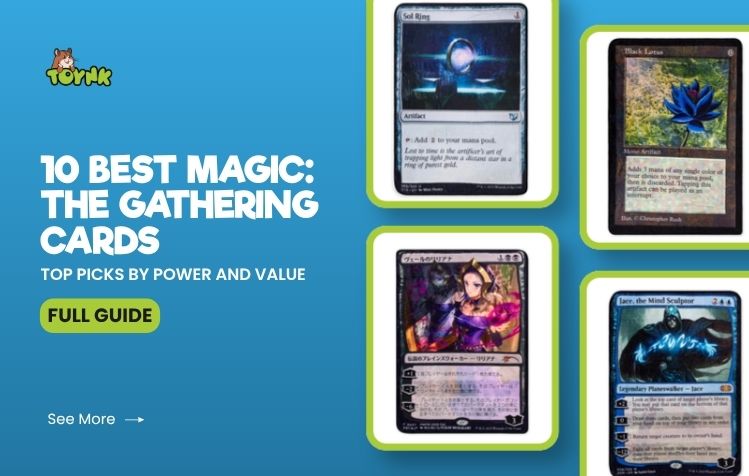
Some are, but most are not. Most singles sell for under a couple of dollars, while the real value sits in old printings, the Reserved List, and rare chase cards, according to the Hobby Card Index. The Reserved List is a group of 572 cards Wizards promised never to reprint, which keeps their supply low, as PreGradeCards explains. The famous Black Lotus, a card considered part of the game's history, can sell for tens of thousands of dollars in top shape. Magic: The Gathering itself is thriving too, pulling in about 1.7 billion dollars in revenue in 2025, per Hasbro.
Cards are not the only way to collect, either. Fans also grab officially licensed pieces like the Black Lotus throw blanket, a Black Lotus enamel pin set, or a limited edition collector coin to show their love for the game.
To Summarize
Magic: The Gathering looks huge at first, but at its core the card game is simple: play land cards, cast spells, attack, and drop your opponent to zero. Learn the turn order, pick one or two colors, and start with a ready-to-play deck. From there, you can play Magic: The Gathering at your own pace and grow your collection as you go.
Browse our Magic: The Gathering collection to find officially licensed gear for game night, and check out our buy more, save more deals when you are ready to stock up.
Shop The Magic the Gathering Collection Here